
The "Kashaf" platform traced the path of an AI-generated video simulating an armed attack on the Golan launched from Syria, from its first appearance on a Telegram channel, through its move to Syrian pages, to Hebrew-language accounts. The tracing shows how the clip was used to amplify security threats attributed to Syria and to tie them to calls for taking control of southern Syria.
A Generated Video Simulating an Attack on the Golan
The "Kashaf" platform detected an AI-generated video of an armed attack launched from Syria, depicting the storming of an Israeli position and the capture of soldiers, and showing gunmen on motorcycles advancing near a sign bearing the name "Golan". The clip ends with a warning phrase reading "We will see it soon", written in Arabic, English and Hebrew, the same phrase that accompanied the video in several posts the Kashaf platform later monitored.
The "Osama bin Zaid" Channel and the Starting Point
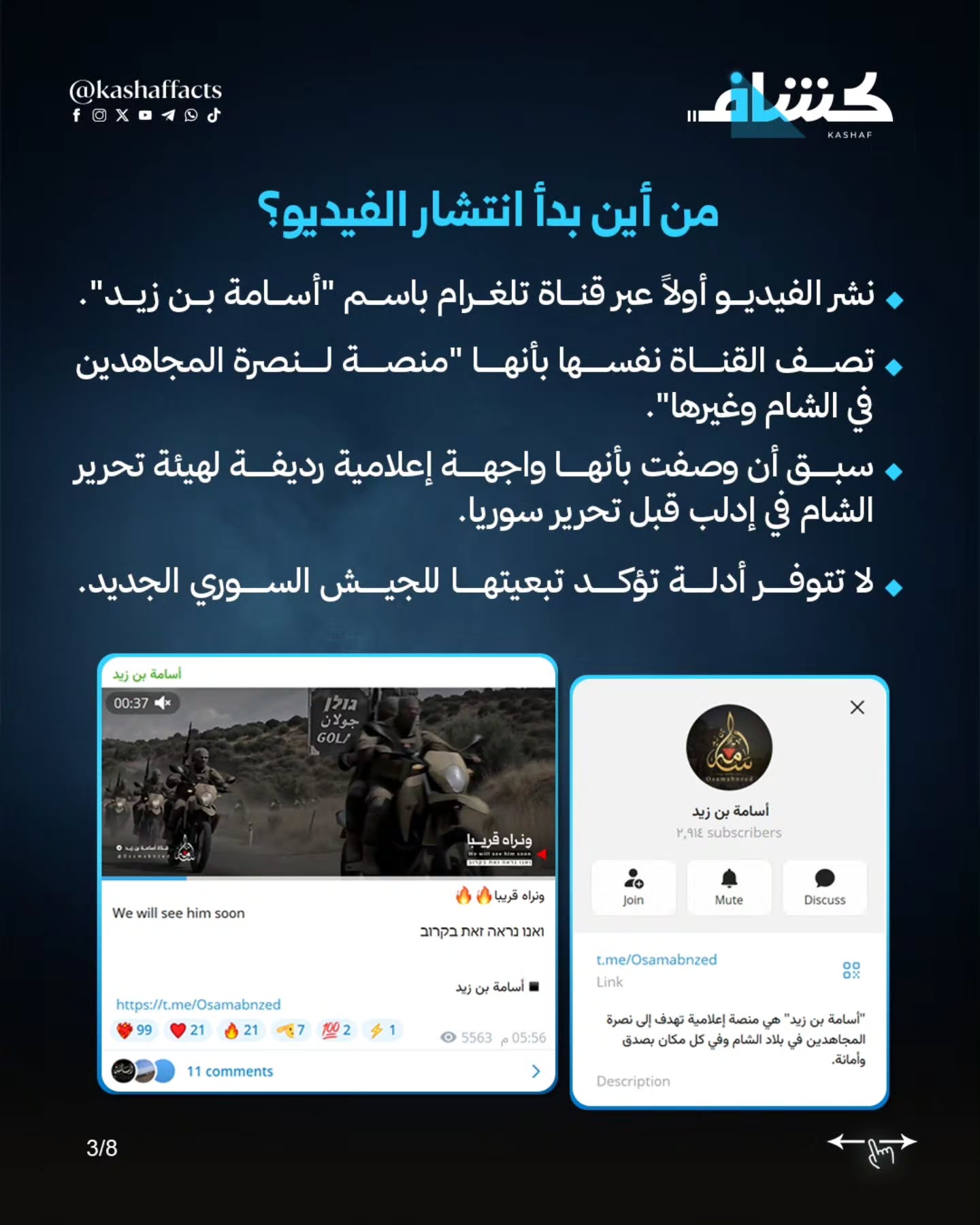
The video was first published on a Telegram channel named "Osama bin Zaid" (@Osamabnzed), which has about 2,914 subscribers and describes itself as "a platform supporting the mujahideen in the Levant and elsewhere". The channel was previously described as a media front affiliated with Hayat Tahrir al-Sham in Idlib before the liberation of Syria, but there is no evidence confirming its affiliation with the new Syrian army, nor that the clip came from any official military body.
The Move to Facebook and X
The video later moved to Syrian pages on Facebook and the X platform, among them the page "Al-Jumhuriya al-Homsiya" and an account named "Rian al-Masri" (@Rian_almasri), and it was accompanied by the phrase "We will see it soon". By contrast, the clip was not found on official media outlets or on the accounts of the Syrian Ministry of Defense, and its circulation through Syrian pages does not prove a link to an official military body.
Hebrew Accounts and the Claim That the Clip Came From the Syrian Army
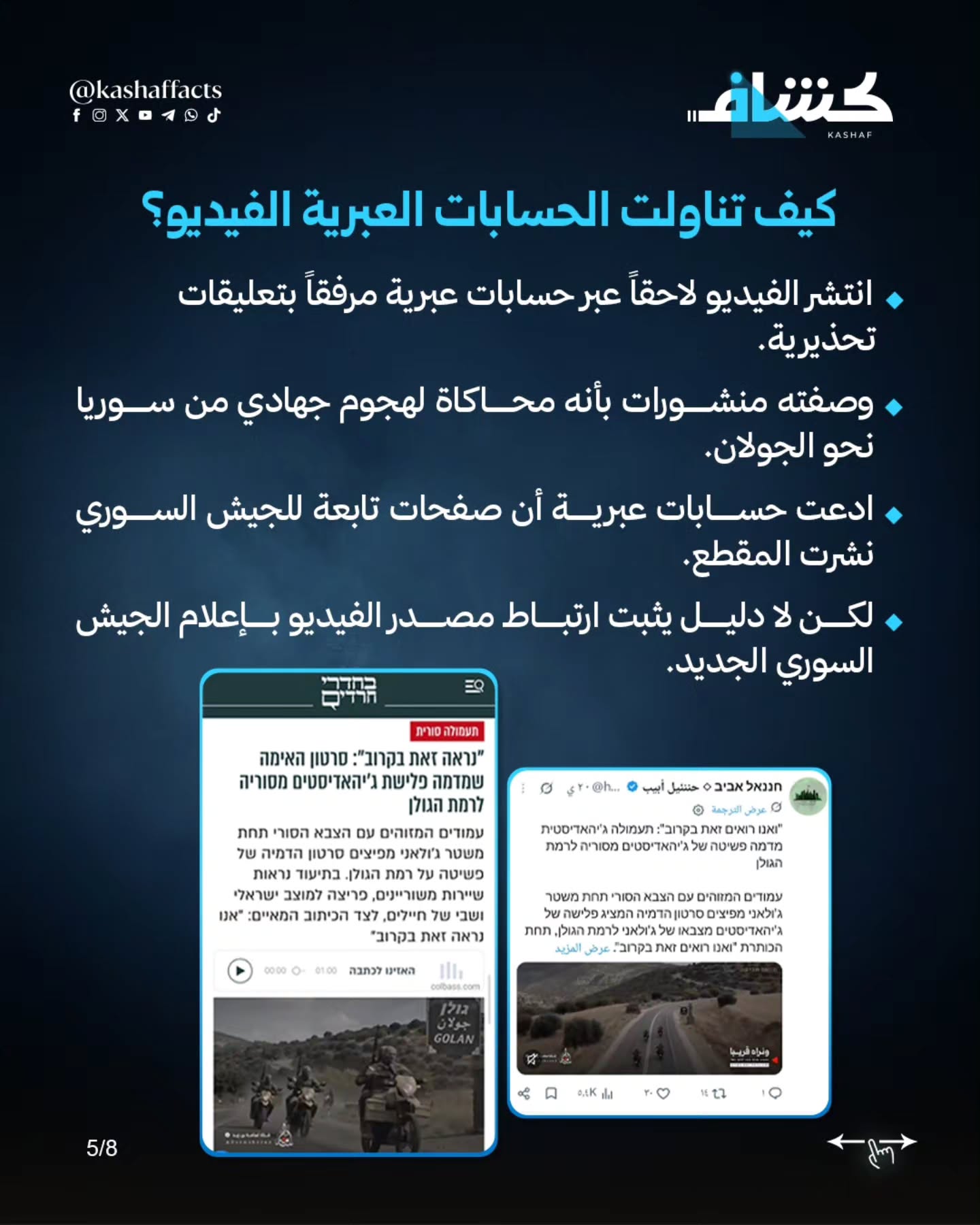
The video later spread through Hebrew-language accounts that attached warning comments to it, and posts described it as a simulation of a jihadist attack from Syria toward the Golan, while the Hebrew site "Behadrei Haredim" classified it as "Syrian propaganda". Hebrew accounts claimed that pages affiliated with the Syrian army had published the clip, but there is no evidence linking the video's source to the new Syrian army's media, as its starting point traces back to the "Osama bin Zaid" channel on Telegram.
From an Alleged Threat to Calls for Expansion
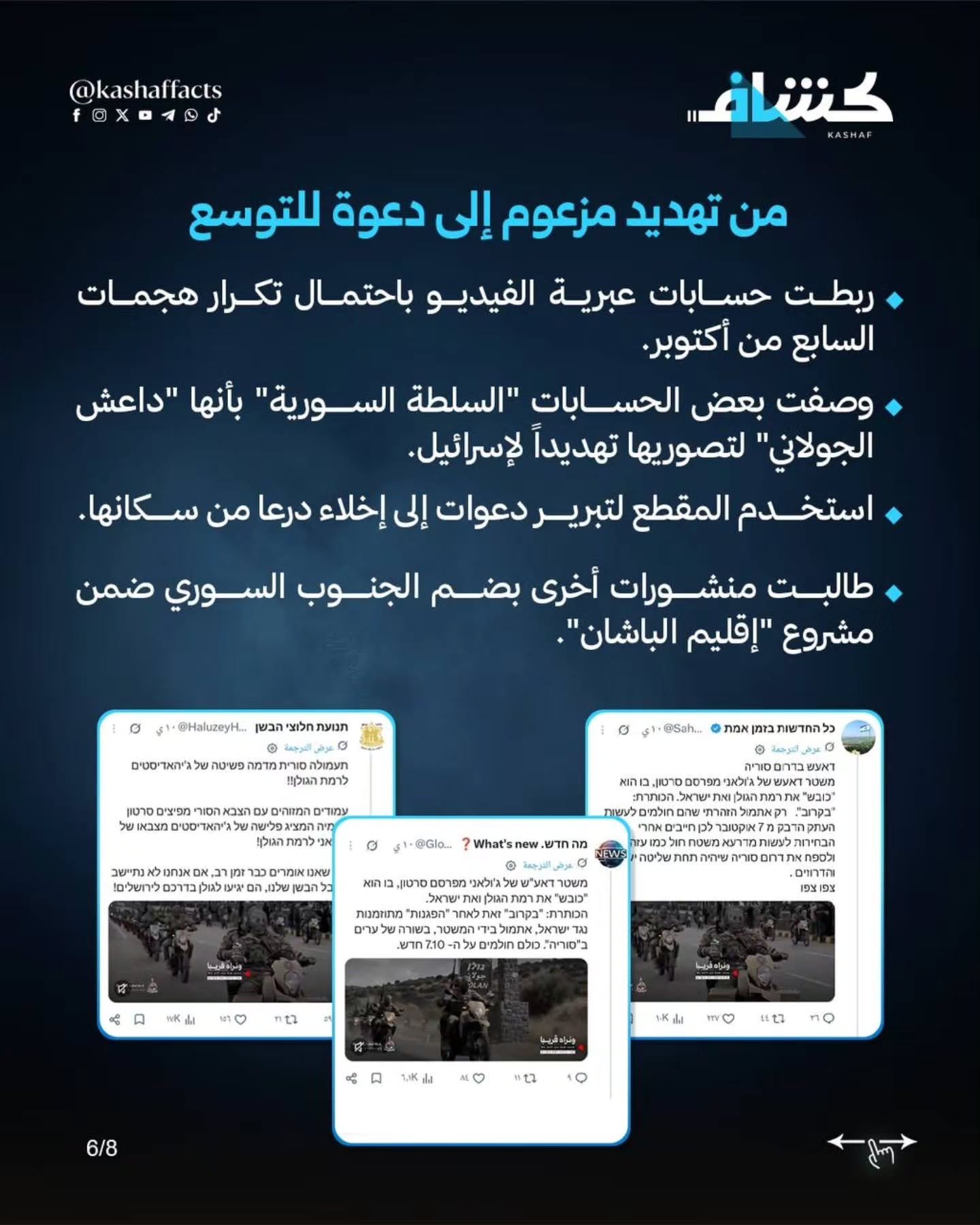
Hebrew accounts linked the video to the possibility of a repeat of the October 7 attacks, and some described the "Syrian authority" as "Jolani's ISIS" to portray it as a threat to Israel. The clip was also used to justify calls to empty Daraa of its residents, while other posts demanded the annexation of southern Syria under the "Bashan Region" project, as the rhetoric moved from an alleged threat to open calls for expansion into Syrian territory.
The Official Syrian Position and the Question of Timing
By contrast, Damascus affirms that the Golan is occupied Syrian land and rejects Israeli sovereignty over it, demands the withdrawal of Israeli forces to the lines that existed before 8 December 2024, and calls for respect of the disengagement agreement signed in 1974, and its declared official position includes no military option to recover the occupied territories. This shows a clear gap between the official position and the content of the video that Hebrew accounts used to amplify threats attributed to the Syrian government, while the question remains open as to whether the timing is linked to the Israeli elections.